
Orbit: the AI app builder that turns prompts into real products
Tired of chatbots that forget context after three messages? Orbit is Forion’s upcoming AI app and product builder—built to plan, generate, preview, and iterate in one continuous loop, so you ship runnable code instead of scattered snippets.
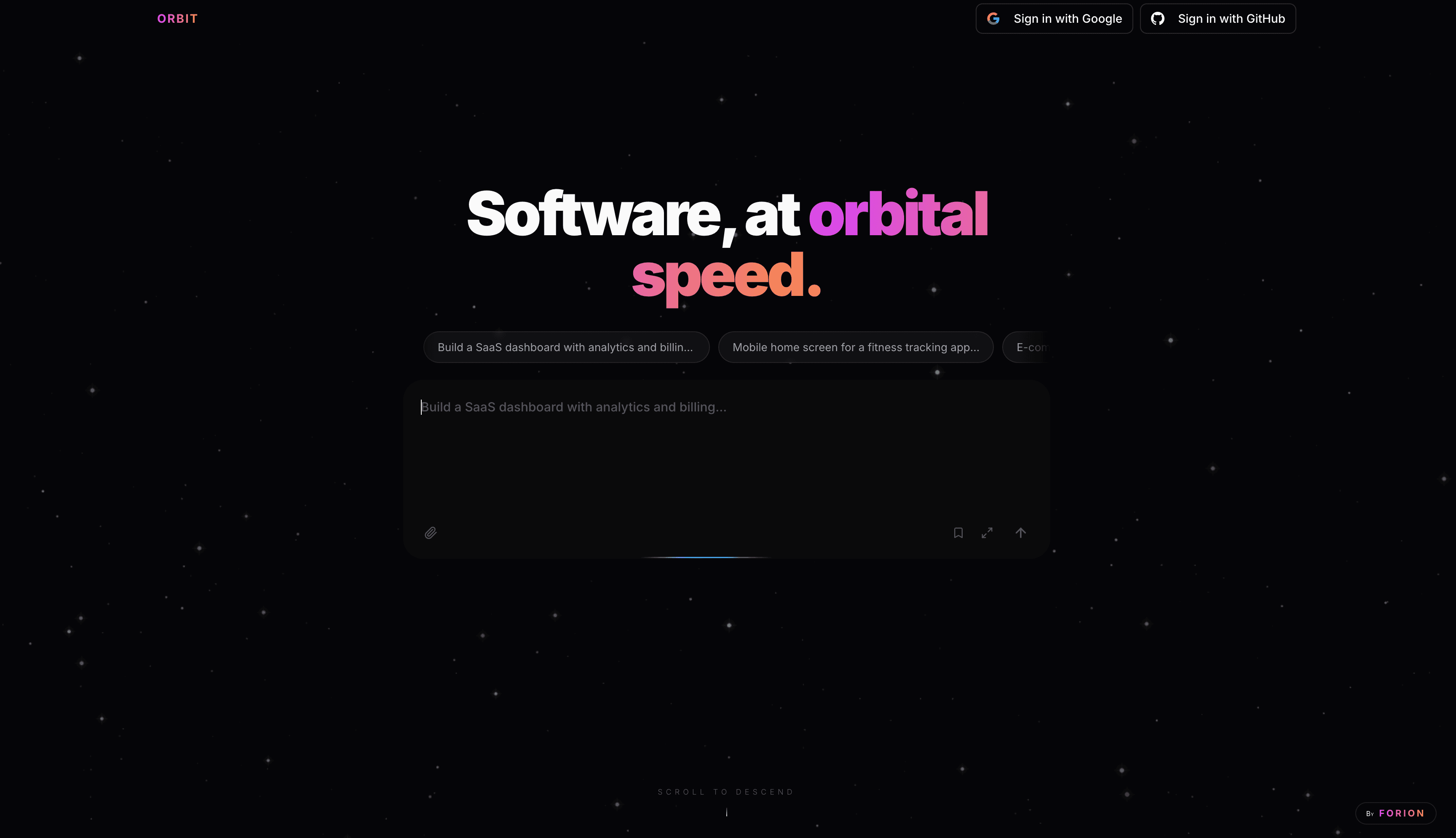
If you have tried “AI coding” tools, you have probably felt the same whiplash: a clever patch in one file, then silence when you ask for the next screen, the auth flow, or the API that ties it together. Real products are not a stack of unrelated diffs—they are a story with order, dependencies, and a surface your users can actually click through.
That is the gap we are closing with Orbit: an AI app and product builder where your prompt stays the spine of the run. You describe what you are building; Orbit uses that as the single source of truth while it plans scope, generates structured code, and helps you recover inside the same loop when something breaks. Less theater, more shipping—and yes, it is still fun when the first full pass lands and you can walk the app like a user.
Why “one more chat” is not a product strategy
Most assistant-style tools optimize for the next message, not the next milestone. That is fine for quick fixes; it is exhausting when you are trying to get from zero to a coherent dashboard, mobile layout, or checkout path. Context drops, conventions clash, and you end up as the human integrator between ten partial answers.
Orbit is aimed at teams who want continuity: one workspace where planning happens before files ship, generation targets whole product shapes (not lone components), and when the build hiccups, diagnosis and repair stay in the same thread you started—not a fresh chat with amnesia.
What Orbit does, in plain terms
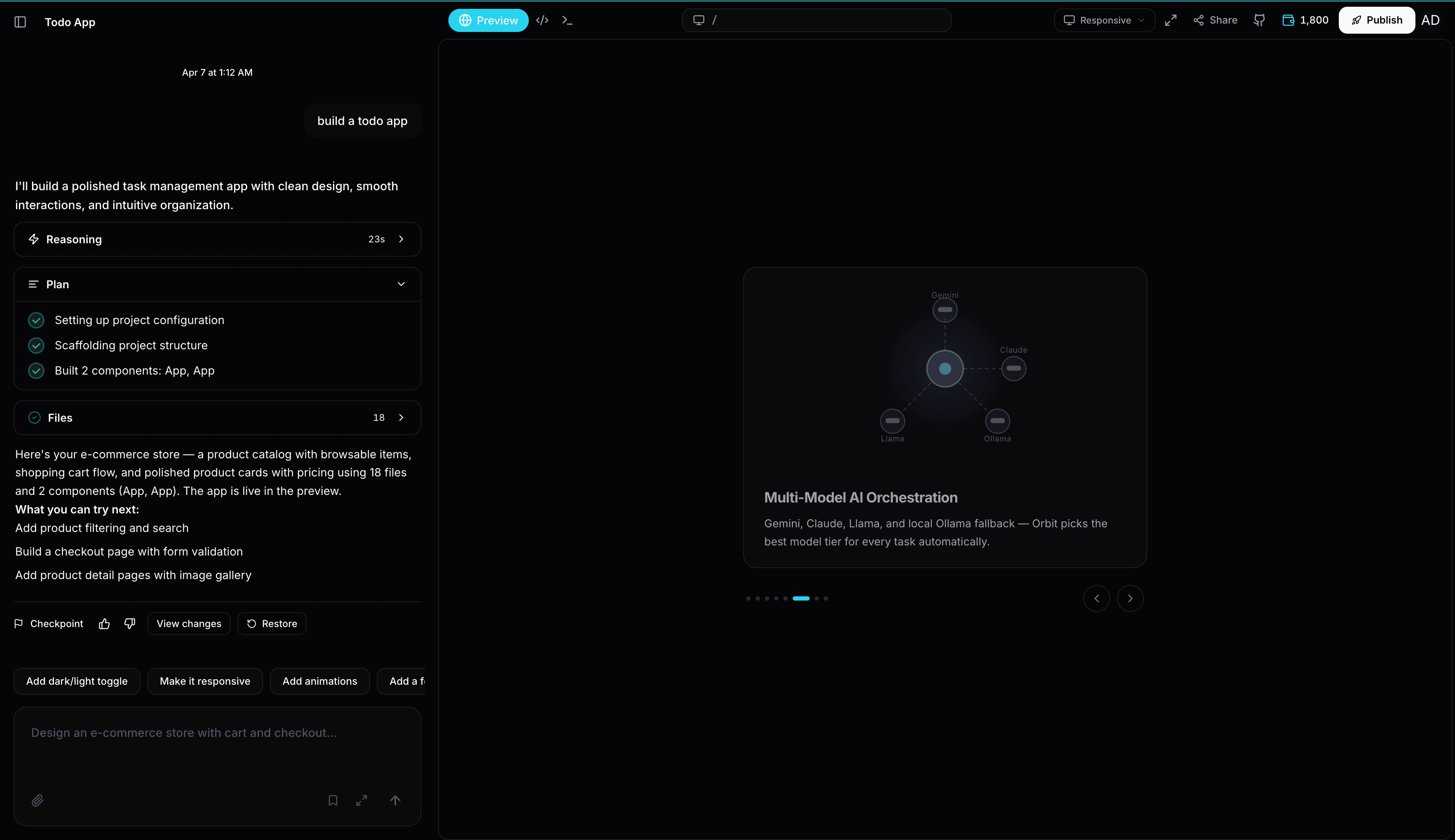
You type what you want to build—screens, flows, who signs in, what the backend needs. Orbit turns that into a scoped plan and ordered work so you are not guessing halfway through whether the settings page exists yet. Then it generates a first full version as structured, runnable code: web and mobile surfaces, with room for APIs and services in the same project story when you need them.
- Describe once: your prompt anchors the whole run, not a disposable opener.
- Plan before code: scope and sequence are settled so generation is not a random walk.
- Generate a real project: a first version you can run and extend—not an empty repo.
- Preview like a user: walk paths in the browser before you call it done.
- Own the output: templates, recents, and My projects keep your work organized and portable.
Peek inside the builder
Here is what the workspace feels like in practice: templates to start fast, your recently viewed work one click away, and a prompt surface that stays tied to the project you are actually building. It is the difference between “another chat” and a builder that remembers what you are shipping.
Plan first, code second—recover without starting over
Half the pain of shipping software is discovering late that features landed in the wrong order or that two routes disagree. Orbit front-loads planning so the model is not improvising structure file by file. When something breaks, fixes stay inside the same operational loop—so “debugging” is part of the product experience, not a side quest in a different tool.
Web, mobile, and backend in one narrative
Products rarely live in a single layer. Orbit is built to target full product shapes: dashboards and marketing pages, mobile layouts, and backend pieces when your story needs them—so front and back stay coherent instead of diverging into two incompatible stories.
Who gets the most from Orbit
- Product and design-minded engineers who want runnable output, not endless mockups.
- Teams shipping AI-native apps who need velocity without giving up reviewability.
- Builders who are done babysitting glue scripts between five different “AI” panes.
Early access and what happens next
Orbit is rolling out through early access first. If you want in, request access on the Forion site—we will keep you posted as invites open and new capabilities ship. Below are quick links if you want to dig deeper before the FAQ.
Keep exploring
Frequently asked questions
- What is Orbit by Forion?
- Orbit is an upcoming AI app and product builder that turns natural-language prompts into planned, structured projects—including web and mobile surfaces and optional backend pieces—with preview and iteration in one workspace.
- How is Orbit different from a standard AI coding chat?
- Orbit keeps your prompt as the source of truth across the run, plans work before generating files, and targets full product shapes instead of isolated snippets—so you spend less time stitching partial answers together.
- Does Orbit support mobile apps and backends?
- Yes. Orbit is designed for web and mobile layouts and can include APIs and services in the same project narrative when your build needs them.
- How can I get early access to Orbit?
- Use the Request access flow on forion.dev to join the waitlist. We onboard gradually and will notify you as your slot opens.
Try Orbit
See capabilities & preview